

Starlink
For remote locations, Starlink is showing speeds that rival metropolitan Ethernet in big cities. Need more throughput? Tie several dishes together through an SD-WAN. Suddenly a remote site looks a lot like HQ.
Connectivity
Fiber, cable, SD-WAN, private networks, cellular failover, wireless LAN, Starlink — sourced from 200+ carriers and providers. We pick the right mix for each site and manage the carrier relationship so you don't have to.
The honest version
If you’re sitting right astride a couple different fiber connections from multiple providers, connectivity probably isn’t at the top of your list for improvements. That’s a fine place to be. We’d rather tell you that than sell you something you don’t need.
But if you have remote locations — sites, branches, job trailers, satellite offices — where your users and applications need the same quality they get at HQ, and you’ve been scratching your head about it, that’s exactly the problem we solve.
SD-WAN
When the internet quality is in doubt, we usually reach for SD-WAN. Our favorite platform is Bigleaf Networks. It load-shares across multiple connections at once — fiber, cable, cellular, fixed wireless, Starlink — so the combination is better than any one of them alone. The bad link degrades; the good links keep carrying the traffic that matters.
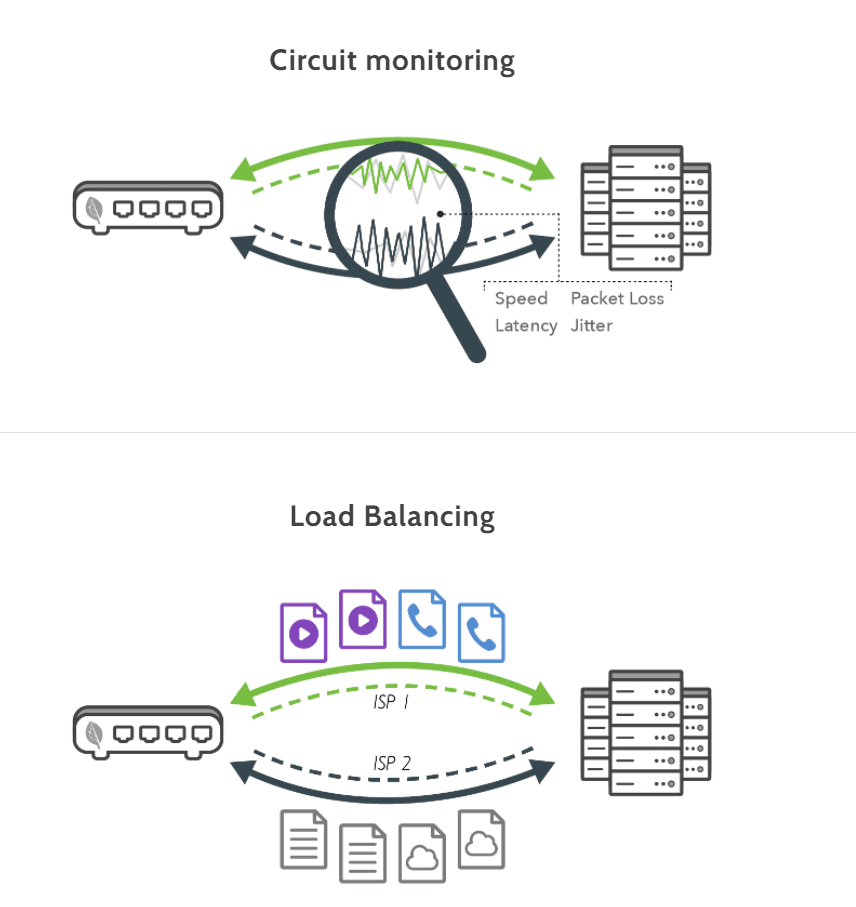
Speed, latency, packet loss, jitter measured continuously on every link. The moment quality drops, the SD-WAN knows.
Voice, video, and critical-app traffic gets prioritized onto whichever link is currently best. Bulk transfers ride the less-preferred paths.
Mix cellular, fixed wireless, Starlink, or whatever new options come along. All show up as one reliable pipe to your users.
A shortcut to the cloud
Once the SD-WAN tunnel is up, your data takes a shortcut to the applications your business actually runs on — Google Workspace, Microsoft 365, Teams, Zoom, line-of-business SaaS. Tunneling straight to hosting data centers means fewer connections, fewer hops, and a faster experience for the humans on the other end.
It sounds simple because it is. The trick is getting the tunnels provisioned, the policies right, and the failover behavior tuned for your actual traffic. That’s the part we do.
Reporting
You know the conversation. Your users are complaining. You call the carrier. The carrier tells you everything is working fine. Now what?
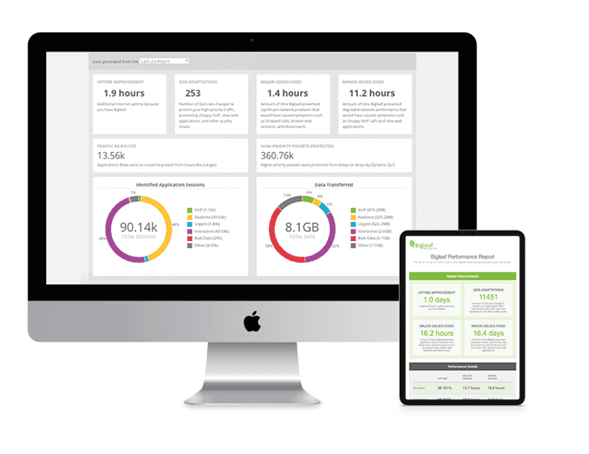
Now you have data. The reporting dashboard shows every packet loss event, every latency spike, every outage, every time the carrier’s SLA got blown — timestamped, graphed, and exportable. When “we don’t see any issue on our end” meets “here are 47 incidents over the last 30 days,” the conversation changes.
Next-generation connectivity
The options in 2026 are genuinely better than they were two years ago, and getting better quickly. Two we’re especially watching:
For remote locations, Starlink is showing speeds that rival metropolitan Ethernet in big cities. Need more throughput? Tie several dishes together through an SD-WAN. Suddenly a remote site looks a lot like HQ.
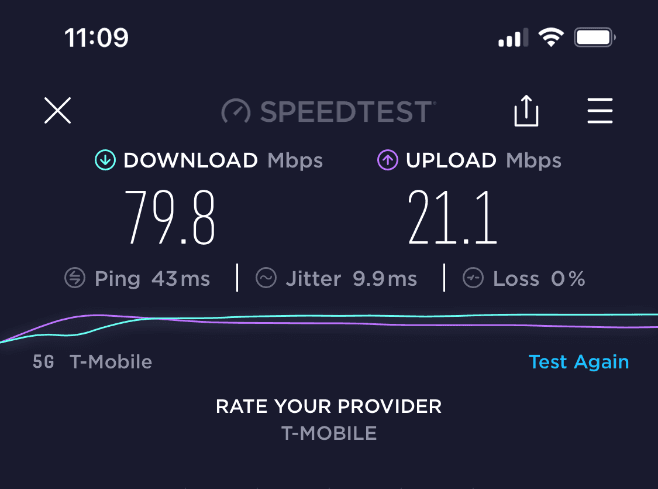
The move from 4G to 5G pushed fixed wireless into gigabit territory with unlimited-data plans around $100/month. Combine it with a terrestrial connection and you can stop worrying about your uplink — until the next wave.
The vendor network
Government purchasing vehicle? We have several available. Regional carrier in Wyoming we’ve never worked with? We’ll onboard them. Specific SD-WAN platform your security team already approved? We’ll build around it. The promise is simple: you tell us the constraints, we assemble the stack.
Multi-vendor coordination is the hidden work in connectivity. Here’s what customers say about how we do it.
Tell us where your pain is — which sites, which apps, what’s breaking. We’ll tell you honestly what it would take to fix and whether we’re the right team to do it.